Zha Jiang Mian炸酱面
Beijing-style noodles crowned with a rich, slow-fried pork belly and bean-paste sauce — three kinds of fermented paste simmered down to a deeply savory, glossy topping for chewy fresh noodles.
Yellow Soybean Paste
250 g
Sweet Bean Sauce
120 g
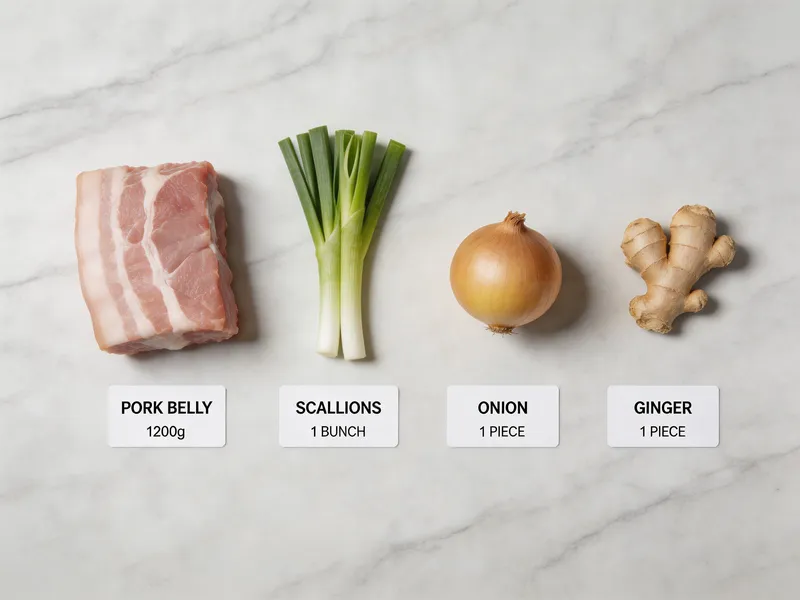
Pork Belly
1200 g
Huangjiu
100 g
Scallions
Onion
Star Anise
2 piece
1 slice
Sichuan Peppercorn
Sugar
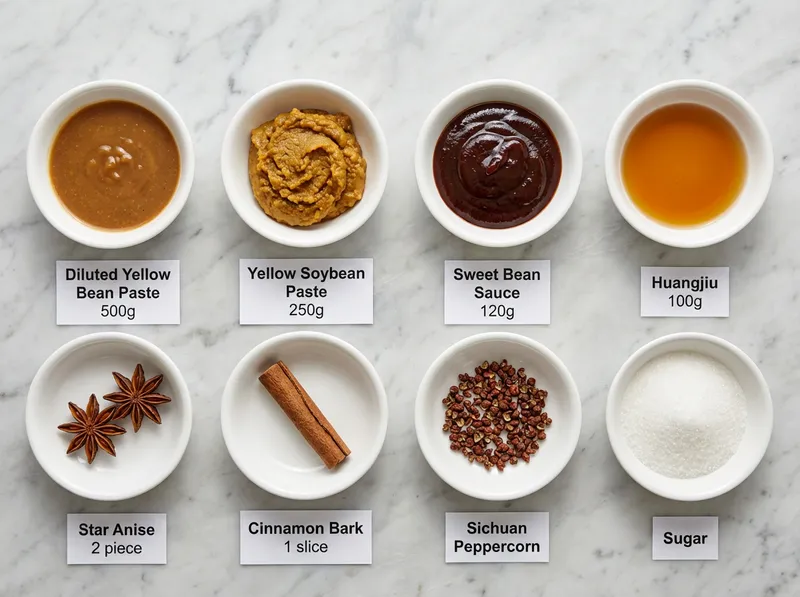
diluted-yellow-bean-paste
500 g
yellow-soybean-paste
250 g
sweet-bean-sauce
120 g
huangjiu
100 g
star-anise
2 piece
cinnamon-bark
1 slice
Seasoning Guide: Start with the listed baseline amounts, then adjust gradually after tasting. Fine-tune salt, sugar, acid, and finishing oils in small increments.
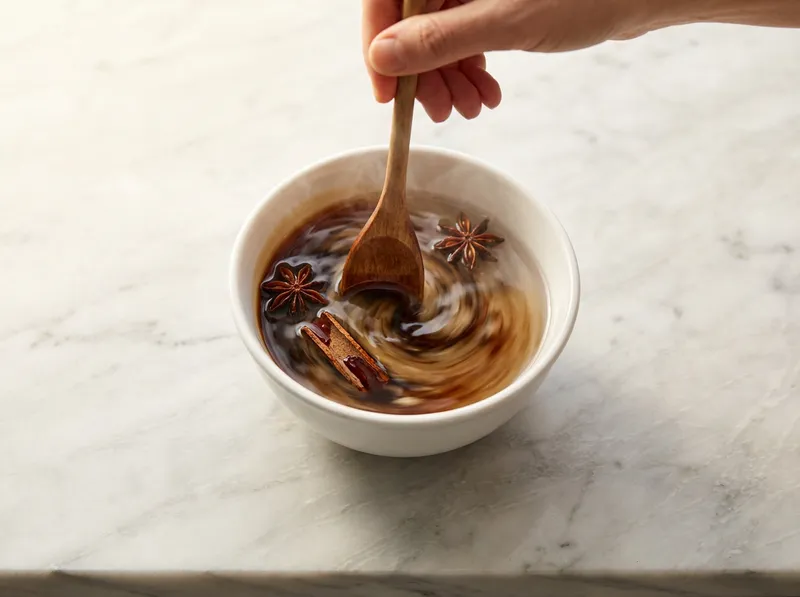
Mix Sauce Base
Combine the diluted yellow bean paste, yellow soybean paste, and sweet bean sauce in a large mixing bowl. Stir thoroughly until smooth and homogenous. Add 300–400g of hot water and stir again until fully incorporated. Set aside. (Tip: thinning the sauce before frying makes it easier to control consistency.)
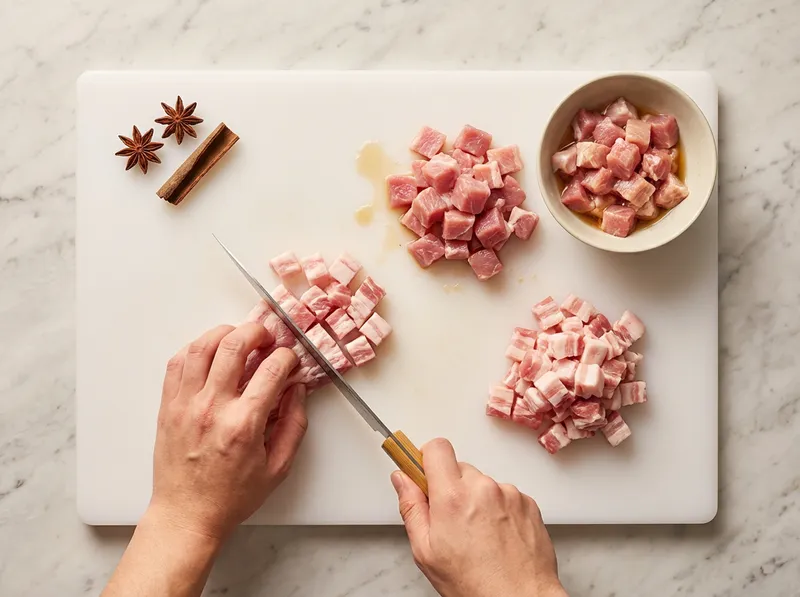
Dice Fatty and Lean Pork Separately
Separate the pork belly into fatty and lean portions. Dice each into roughly 1 cm cubes. Toss the lean pork with a splash of huangjiu and set aside to marinate briefly. (Tip: chilling the meat in the freezer for 15 minutes makes it firmer and easier to dice evenly.)
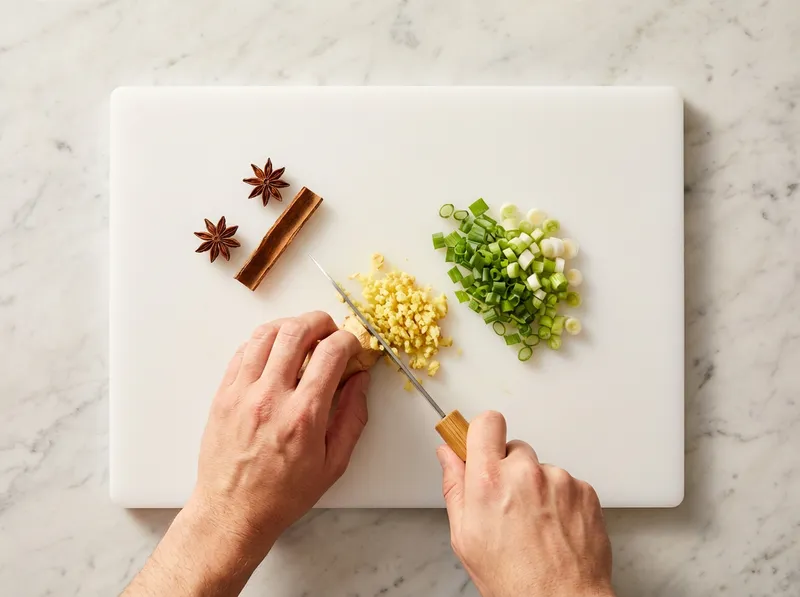
Mince Ginger and Chop Scallions
Mince the ginger finely. Roughly chop the scallions and divide into two equal portions — one portion goes in early with the fatty pork, the other is reserved to add at the very end.
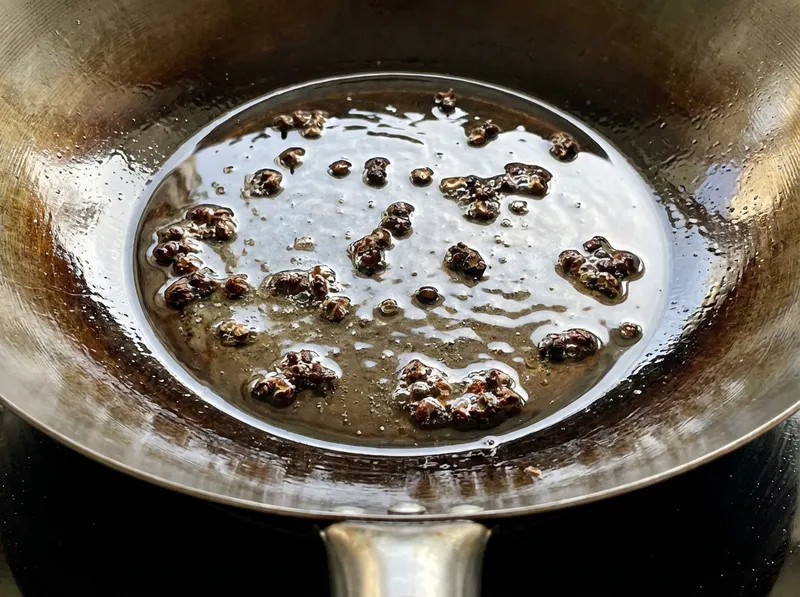
Infuse Oil with Sichuan Peppercorns
Heat about 200g of cooking oil in the wok over low heat. Add the Sichuan peppercorns and fry gently, stirring occasionally, until fragrant and the peppercorns just begin to color (about 2 minutes). Remove and discard the peppercorns immediately — do not over-fry or they will turn bitter. (The seasoned oil can be reserved: once the jiang is nearly done, pour off the excess oil and refrigerate as 'lao you' to use in future batches or for frying fish and vegetables.)
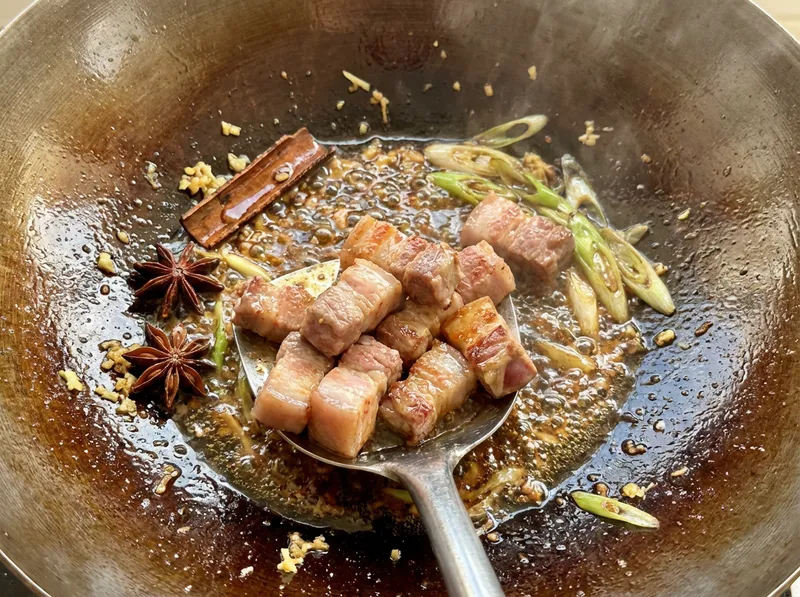
Sear Lean Pork Until Color Changes, Then Remove
Increase heat to high. Add the marinated lean pork to the hot peppercorn-infused oil. Stir-fry briskly until the pork just changes color on all sides — about 2 minutes. Remove immediately and set aside. Do not cook through; the lean pork will finish cooking when it returns to the sauce later.
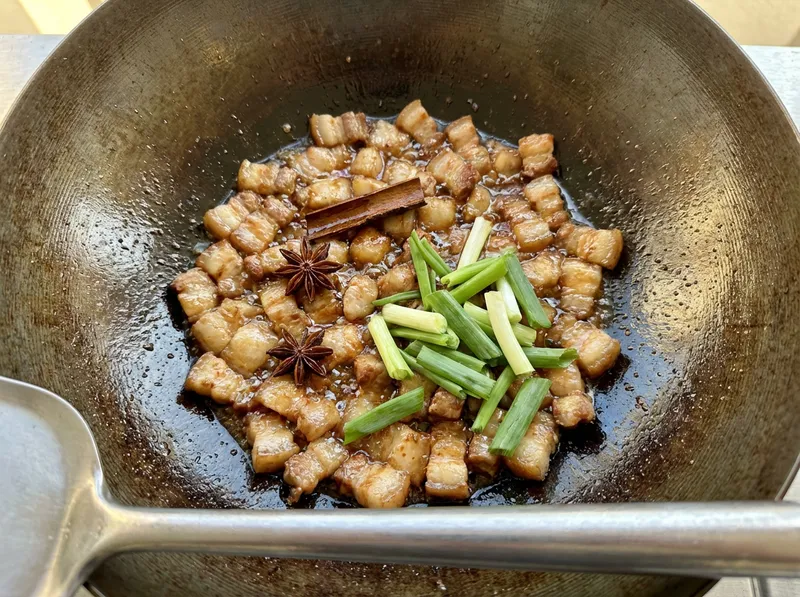
Render Fatty Pork and Add First Batch of Scallions
Add the diced fatty pork to the same wok over medium heat. Stir-fry until the fat renders visibly and the pork cubes begin to shrink and turn golden at the edges. Add the first half of the chopped scallions and stir to combine. The rendered pork fat will become the base of your fried sauce — the more thoroughly it renders, the richer the final sauce will taste.
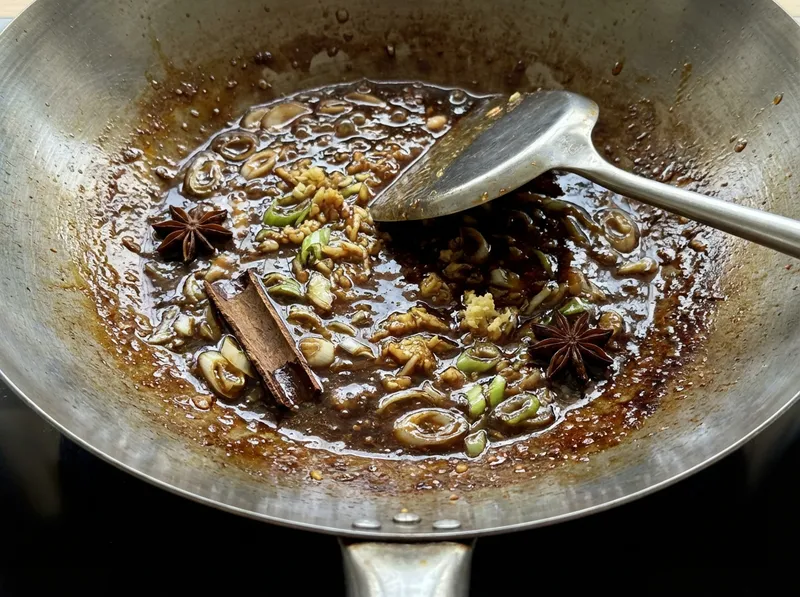
Add Sauce and Bring to Boil
Pour the prepared sauce mixture into the wok. Stir to combine with the pork fat and scallions. Bring to a full boil over high heat, then immediately reduce to low heat. The sauce will bubble vigorously at first — keep stirring from the bottom to prevent scorching.
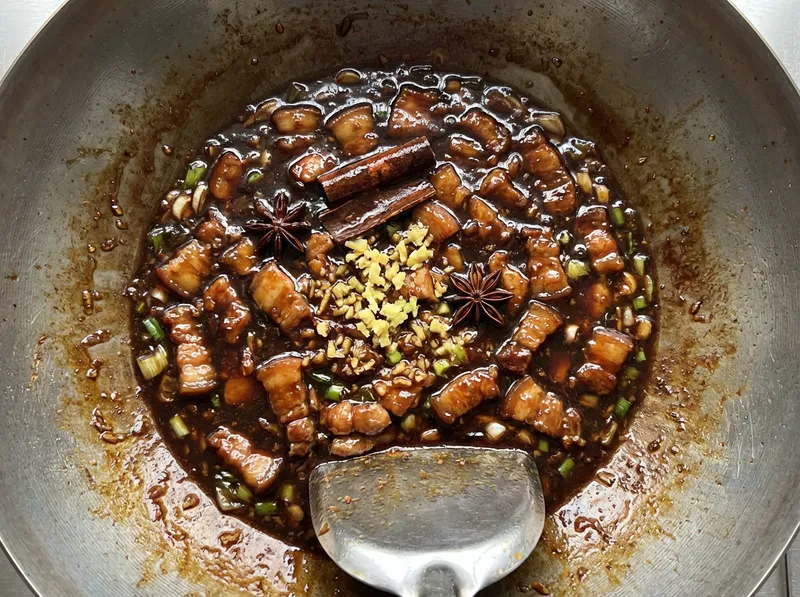
Simmer and Reduce Until Sauce Concentrates
Simmer over low heat, stirring continuously from the bottom of the wok. The sauce will gradually lose moisture — steam rising from the surface will slow and then stop. As it reduces, the color deepens from reddish-brown to a rich dark brown. Continue simmering until the sauce coats the back of a spoon and the excess water has evaporated (about 15–20 minutes total from when you poured in the sauce).
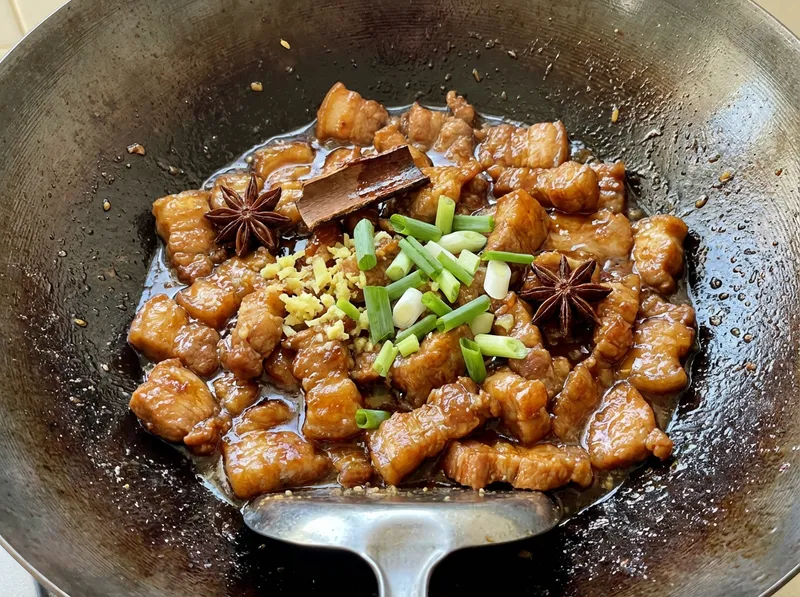
Return Lean Pork, Add Final Scallions, and Season
Add the pre-fried lean pork back into the sauce and simmer together for 2 more minutes. Add the remaining half of the chopped scallions. Taste and adjust with a pinch of sugar if desired. The lean pork was removed earlier to prevent overcooking — fatty pork benefits from the long slow render and stays in throughout, while lean pork is added only at the end.
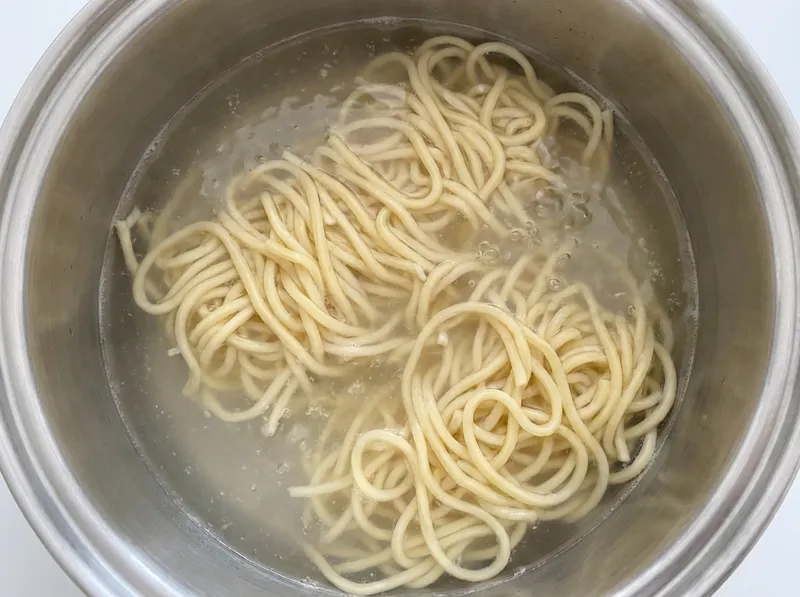
Cook Noodles
While the fried sauce is simmering, bring a separate large pot of water to a boil. Cook the fresh or dried noodles according to package instructions until just done — they should be cooked through but still have slight bite. Drain well.
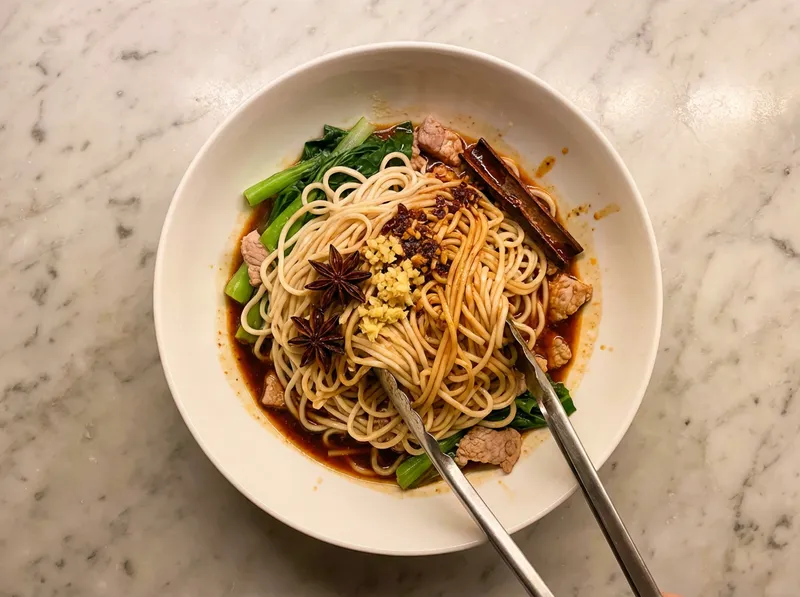
Toss Noodles with Sauce and Serve
Place drained noodles in a bowl. Spoon over a generous amount of fried sauce. Toss until the noodles are evenly coated — you can mix any vegetable toppings in at this stage, or arrange them on top after mixing. Serve hot.
Serving Suggestion
Serve Zha Jiang Mian as a complete dish while hot.
Storage
Store leftovers in an airtight container in the refrigerator.
Reheat: Reheat gently on the stove or in the microwave before serving.